Thursday, April 17, 2008

1953


Later this month (Sunday, April 27 to be exact), the destination of choice is definitely Stinkylulu’s Online Palace of a Thousand Delights. Occasion? The kick-off of a new season of Supporting Actress Smackdowns. Wherein Lulu and panel (of which I’m honored to be a member) mull over a specific year of supporting actress Oscar nominees, sniffing around the pros and cons of each performance – and either reaffirming the Academy’s choice or crowning a new winner. A kind of George Cukor rumble – essentially decorous but frequently barbed. With Jets and Sharks led by Mary Haines and Sylvia Fowler.
In the meantime I’ve got a lot of related rambling to do. Because 1953 is the Smackdown target this time out – and movie-wise, that’s a year I just can’t stop talking about. I was actually around in ’53. But not quite old enough to know what year it was. Though I wasn’t actually aware it was ’53 in ’53, I do remember things that happened then. And I can even recall a year or two earlier when my parents gave me a plastic wrist-watch. In response to any adult who'd humor me with a "Kenny, what time is it?", I’d stare intently at the face of that thing, then announce , "It’s a quarter to time." I’m not sure whether I thought I was hoodwinking them – or actually believed I was imparting legitimate information.
The first time I actually remember being conscious of its being such and such a year was in 1955. Mainly because of ads for ’55 cars. Plus my parents took a trip to some American Emerald City (Minneapolis, I suspect) and brought me back a souvenir. A toy Car of the Future. Streamlined, spacey and colored a vivid chartreuse. In order to make me understand the concept of a future year, I expect someone must have clued me in as to exactly what year we were in. At any rate, for all its supposed futurity, that car remains fully linked in my mind with 1955. There was also Cinemascope 55 – garden variety Cinemascope, I imagine, dressed up in the year’s movie ads to suggest startling new dimensions – presumably the nearest thing , thrill-wise, to a trip to Mars.
Cinemascope was one of the weapons in Hollywood’s battle to woo defectors back from their TV sets. By ’55 I realized it meant widescreen. But in ’53, when it first arrived, I apparently wasn’t too sure. Because one of my 1953 memories is of sitting in a theatre watching "The Robe". The publicity mills had made it clear even to a four year old that this picture was in Cinemascope. And, whatever that was, it clearly constituted a substantial addition to the wonders of the world. Stereophonic sound must have been part of the package too. Because I can remember being scared bug-eyed by a sudden theatre-rattling trumpet blast announcing the onscreen arrival of wicked Emperor Jay Robinson. Thereafter, I made my official policy on the new phenomenon clear to anyone who’d listen. "I hate Cinemascope. It’s too loud!"
I came to terms with Cinemascope soon enough. And widescreen movies did come to stay. But the process wasn’t enough to turn back the clock. The old Hollywood system – with its comfortably ritualized genres and enormous, loyal audience was in for a jolt
Among the gimmicks Hollywood hauled out to combat audience attrition, 3D remains the one most inextricably linked to 1953. The technique, which provided a pleasantly giddy optical sensation, had been around in some form since the 1800’s. Stereoscopic images, looked at through special viewers, were a diverting novelty in homes across the country. But no one had figured out an effective and commercially viable way to transfer the experience to the motion picture screen. That is, until a tireless Hollywood promoter called Arch Oboler purchased an option on a new Polaroid process called Natural Vision which not only provided 3D motion picture images, but could do it in full color. As far as I can tell, the filming process – cumbersome and time-consuming – involved two cameras shooting scenes from different angles. Theatre showings required a pair of projectors which – perfectly synchronized (and this was vital) – superimposed both images onscreen together. Special polaroid glasses (provided by the theatre}–one lens red, one green - allowed audiences to see a different image through each eye. A trick of the brain enabled viewers to combine the two pictures into one. The resultant separation of background and foreground – startling and quite fascinating – made it apparent that the 2D images audiences had been long conditioned to accept were, in fact, severely limited perspective-wise. And - properly photographed and projected –onscreen objects aimed (sometimes hurled) toward the audience seemed to leap right out of the screen. Hence the 3D slogan "A Lion in Your Lap! A Lover in Your Arms!" The picture that slogan was initially attached to was Arch Oboler’s "Bwana Devil", which he’d convinced United Artists to release late in 1952. It was a routine jungle adventure with no particularly big names in the cast. But audience response to the picture – and more specifically to 3D - was stupendous. Box-office records were shattered in city after city, as people lined up for blocks waiting for a chance to don the red and green glasses. Hollywood execs looked up from their hand-wringing, smelling a solution to the industry’s woes.
Immediately studios were falling over each other, announcing 3D projects. Titles previously planned for normal filming were re-tooled as 3D productions. Within six months, the 3D boom was in full swing and initial box-office results were colossal. Warner Brothers’ "House of Wax" with Vincent Price generated the kind of profits usually associated with De Mille blockbusters. A Guy Madison western called "The Charge at Feather River" was held over everywhere. As a matter of fact, there wasn’t a genre that wasn’t suddenly awash in 3D – sci-fi (the marvelous "It Came from Outer Space"), swashbucklers ("Sangaree" with Fernando Lamas and luscious Arlene Dahl), crime thrillers ("I the Jury", a Mickey Spillane slugfest), musicals (the lavish "Kiss Me Kate" from Metro). Martin & Lewis got into the act ("Money from Home"). As did John Wayne ("Hondo") and Hitchcock ("Dial M for Murder"). Assuming the profits would continue unabated, studio heads confidently stated that in future, all films would be in 3D. But there were flies in the ointment. Not the least of which were the technical problems inherent in the proper exhibition of 3D films. Perfect projection synchronization was necessary to assure proper 3D performance. And it was impossible to monitor every showing across the country. Equipment breakdown and projectionist error turned show after show into disasters. For neighborhood theatres, the costs of outfitting for 3D capability were often out of the question. What’s more, even after successful screenings, people were complaining about the 3D glasses – common charges: inconvenient, clumsy, uncomfortable, impractical for people who already wore glasses . And beyond that, there were widespread complaints of eye-strain everywhere 3D was shown. Viewers seated toward the side sometimes grumbled about not getting the full 3D effect. Some people got to the point where they preferred to stay home if they found out a movie they’d planned to see was in 3D. Plus it was still widely perceived as a novelty. And novelties have a habit of wearing off – of suddenly becoming "so yesterday". What’s more, censorship was relaxing. Audience tastes were undergoing a change. The incoming tide of heavy, increasingly frank black and white dramas, the Method acting, the restricted films and foreign art-house items hardly seemed compatible with 3D. Many considered 3D a gaudy huckster’s trick – meant for hyping the visual entertainment value of Saturday matinee potboilers. But unseemly, undignified and thoroughly inappropriate when attached to serious Cinematic Art. No single reason was responsible for 3D’s demise. But the combination was enough to bring the 3D era to a grinding halt. By the end of ’54, the process had been all but scrapped. The final 3D features were sneaked into theatres in flatscreen format. And 3D was quietly swept away to join other cultural dust-bunnies like the charleston and the snood.
I assume our town must have had 3D movies in ’53. But I never saw them then. Not until I was in my 30’s – and living in a big city. That’s when a spate of limited 3D revivals cropped up. I thought they were fabulous. Completely undisappointing. I remember "Inferno" with Robert Ryan and Rhonda Fleming was a particular 3D bull’s-eye. But the second-run theatre I went to as a child probably wasn’t equipped to show 3D. Still, I did know about 3D then. And I did have a couple of 3D comic books which I was crazy about. With the red and green glasses (not so) firmly in place, I perused and pondered these items as if they were pieces from the Shroud of Turin. One was Little Lotta. The other was Richie Rich. I remember a particular page showed somebody coming down a slide right at me – and I was endlessly delighted and boggled by it. I had 3D view-master reels too. Queen Elizabeth’s wedding, Niagara Falls, the Greatest Show on Earth and some fairy-tales with Gumby-like protagonists who were supposed to be Snow White and Cinderella, but looked more like the Golem. Still, the 3D was pretty good.
There have been periodic attempts to revive 3D. But none have quite caught on. In spite of the undying – almost hypnotic – appeal of the process itself. As I write, a new 3D boom seems imminent. The old-fashioned 3D glasses have been replaced by a light, comfortable apparatus, largely indistinguishible from designer sunglasses. Soon, it seems, there’ll be no need for glasses at all. And with technology growing by leaps and bounds, IMAX 3D presents images that are frankly jaw-dropping. Box-office returns for the 3D editions of films like "The Polar Express" and "Beowulf" have been enormous. 3D concert films have also made tons of money. Exhibitors around the world are spending fortunes equipping theatres to show future IMAX 3D productions. New 3D titles are announced regularly. The current slate includes Disney’s projected 3D remake of its 80’s sfx classic "Tron". This new 3D age may or may not pan out. But, for my generation, 3D will always mean 1953D.
Now, as anyone who’s ever read this blog knows, I love old Hollywood – and old Hollywood movies. Even so, I’d like to think I can appreciate what’s come after. Don’t – I repeat, don’t – lump me in with the cobweb and crinoline crowd who think good movies died with Louis B.Mayer. I can still feel nostalgic, though, for the innocent adventure films, knights and bandits, pirates and pashas – cynicism-free and decked out in mouth-watering color. The endless stream of war-bonnet westerns. And the musicals – those twinkling dream-factory creations where a 3-strip Technicolor breeze was all it took to transform ordinary dialogue into buoyant song and dance. I remember nodding in agreement when I read someone’s fond recollection of the time when a new musical – with something wonderful in it – opened every other week
Looking back, it’s clear 1953 was the Indian summer of that era.
I lived in a small Canadian town. And my mother took several years off work when I was born – mainly to focus on Baby. She started taking me to the movies before I could walk or talk. And you’d better believe it - the movies played a part in teaching me to talk. Those big beautiful technicolor faces, those voices – dulcet, dramatic – speaking directly to me in the dark. Demanding a response of some sort – awe, affection, emulation. All erupting sooner or later in words. My mother was young – and probably looked younger. I can remember, when I was six or so, walking with her near the train station. And some pint-sized smart-alec called out, "Hey, kid! Is that your mother or your sister?" She was my first movie-going confederate. And little more than a kid herself.
It was – as I said – a small town. And safe. I never heard of anything really bad happening to a child. By the time I was five, the next-door kids and I would trek downtown ( it wasn’t far} nearly every Saturday to the Royal Theatre for a Saturday matinee. Fifty cents tops would cover the cost – refreshments included. There were similar second-run theatres in other parts of town – the Lake and the Fort. But these we rarely visited. A grown-up would have to drive us there. And pick us up around five when the show let out.
Occasionally my parents would take me along to a night-time movie. Usually at the Capitol or the Odeon. These would be more sober and sophisticated events. But thrilling in their own "so this is what adults do" way. Even more rare were forays to the Drive-In. An especially exotic destination. A kind of combination theme park and Katmandu. Where hot dogs and french fries achieved cordon-bleu levels of delectability. And Mom and Dad always had to be careful to remove the speaker from the car window before they drove away.
But, above all, the movie-going experience meant Saturday afternoon at the Royal. Kids were not only welcome. That one day a week, they seemed to have exclusive rights to the place. I don’t recall ever seeing a grown-up actually occupying a seat on a Saturday afternoon. It’s unlikely they’d have relished the experience. What with the intermission – frantic onstage games and contests plus occasional special appearances by dignitaries like Elmer the Safety Elephant and the Planters Peanut Man. I seem to remember a real celebrity horse onstage once, though which cowboy he belonged to I couldn’t tell you. The adult world was pretty much represented by a manager (who doubled as MC), a box-office lady, a candy-counter operator, an usher or two. How did they all cope?
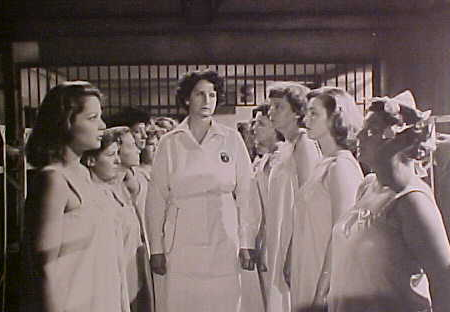
Certainly the Saturday afternoon noise levels would have scared away most voting age patrons. I can still remember the tumultuous audience response to onscreen events. I have an idea we weren’t always clear as to exactly what features we’d be seeing. The tiny foyer was so crammed with exciting lobby cards and posters. Some current. Some forthcoming. Some just there for pure razzle-dazzle. But the most ecstatic moments of all would come when the onscreen credits revealed the names of a favorite comedy team (Martin & Lewis, Abbott & Costello, the Bowery Boys). The shriek of approval would be deafening. And then, if the next frame started in with spooky music and eerily wavering graphics, indicating that our comic heroes would be encountering a ghost or a monster or anything haunted or headless, the place just went nuts. The only thing that kept a roof on the building was the presence of the ever-patrolling matron , a Jane Darwell type – uniformed, stern, sturdy – armed with a flashlight that carried the implied authority of a cudgel. Like a grandmother who meant business. It was her job to see that the situation never morphed into full-on prison riot mode. Unfailingly – and amazingly - she accomplished her mission. Even the tough kids didn’t want to cross her. And – as far as I know – never did. And at the end of the afternoon, when sated audiences spilled out onto the streets, like cap-guns exploding, the place was still standing.
The Royal Theatre and the Saturday matinees are only memories now. But in ’53 the fun had already been going on for decades. And – without really thinking about it – most people just assumed it would go on forever. But the writing was already on the wall.

Sunday, February 24, 2008

Then again, what do I know?


Apparently I know even less than I thought I did. All those compelling reasons that made Julie Christie's Oscar an inevitability just disappeared in a puff of scented Gallic smoke. Despite the egg on my face, I'm delighted for Mlle Cotillard. She beat the odds - with a performance that deserves every accolade. May I now consider relations between the U.S. and France to be officially hunky-dory again?

PrognOSCARcations: Why Julie Christie Will Win


Well, If I wait much longer these won’t even qualify as predictions. ‘Cause the Oscars are almost upon us. The ceremony that looked for so long as if it wouldn’t be happening at all should be getting underway within a matter of hours. The long, long train of Oscar predictions is about to pull out of the station. So if I want to slap my own placard onto the back of the caboose, it’s now or never.
This year’s male categories (Actor and Supporting Actor) are almost universally considered to be locks . For Daniel Day-Lewis("There Will Be Blood") and Javier Bardem ("No Country for Old Men") respectively. No argument here. Not that either of them would be my choice. But both have attracted massive critical acclaim. And both performances have been perceived as singularly ballsy. Effectively neutralizing the danger both films initially faced of being relegated to art-house ghetto status. By now, mass audiences have been thoroughly wooed and won. Day-Lewis – if not the Olivier of his day – seems to be at very least its Paul Muni. In other words, his generation’s idea of what constitutes a great actor. His film appearances are rare enough to qualify as events; he’s famous for awesome amounts of preparation and commitment. And for disappearing chameleon-like into every role he plays. When he’s not filming, he’s basically M.I.A. Certainly no tabloid staple; his personal life pretty much stays just that. The actor emerges into public view every few years like some prodigious passing comet. Then –poof! Gone again.
Whether you like his TWBB performance or not (and most, it seems, do), there’s no denying it’s impossible to ignore. Big, plummy, grand or grandiloquent (depending on your viewpoint). It certainly seems to be a lot of people’s idea of great acting. And – no question about it – absolutely central to the film. He’s also won a lot of precursors and shone at the SAG and BAFTA ceremonies ( both widely televised). Gracious and unassuming with acceptance speeches that played very very well. What with the continuous affirmation all through award season, it’s now reached the point where a win for anyone else would undoubtedly ignite a firestorm of disapproval. Even George Clooney , who generally seems to have most of Hollywood eating out of his hand, is not going to be able to stop the Day-Lewis juggernaut.
Bardem’s even more of a lock. Not only is he part of a hugely acclaimed box-office hit. He’s generally perceived as the coolest thing in it. His character – Anton Chigurh, a kind of evil Energizer Bunny, has attained pop culture icon status. Something fan boys, geeks, yahoos and serious film buffs all seem to be buying into. It’s not a performance I’m particularly taken with. As I’ve said elsewhere, Bardem’s characterization is intense, but one-note – a sort of land-roving shark from "Jaws". But – for the vast majority of viewers – Bardem seems to have captured and combined the nasty cool of Hannibal Lector and the Terminator. And (apparently) that’s a good thing. Like Day-Lewis, Bardem’s dominated the precursors. And let’s not forget the man has an impressive resume. Long a superstar in his native Spain, he’s already delivered outstanding work in drama (Oscar nominated in "Before Night Falls" and (some felt) Oscar-robbed in "The Sea Inside") and comedy (check out "Boco a Boco", a Spanish film from ’95; he’s fantastic in it!). Bottom line: there’s no way JB’s going home empty-handed on Oscar night.
"No Country"’s also set to take picture and director. Its cool factor is substantial. And the Coen Brothers are widely regarded as overdue. 90% of the film operates as a gritty, kick-ass action thriller. As for the ending – well , some people actually do like it. And a lot more are saying they do. Because one’s response to it seems to be this year’s litmus test for sophistication and hipness. There’s no percentage in being the boy that says this emperor has no clothes. And of course "No Country" plays quite brilliantlly into the prevailing zeitgeist i.e. civilization as we know it is already waist-deep in a growing shit-storm and "you can’t stop what’s coming."
Supporting Actress is this year’s most wide-open race. At least four of the five gals concerned (Dee, Ryan, Blanchett and Swinton) have a strong shot at the trophy. But my guess is that Ruby Dee’s name’s the one we’re going to hear when the envelope’s opened . She’s the only nominee in this category who’s got a strong tide of industry sentiment behind her. An elderly, beloved veteran (who, surprisingly, has never been nominated). A woman whose artistic credentials are matched by a laudable life as a social activist and general class act. Let’s admit it – there are some who’ll simply consider it their civic duty to vote for Dee. Her name was nowhere to be seen in the year-end critics’ polls. But that didn’t stop her colleagues from giving Dee the SAG award. Of the nominees, she’s the only one whose victory would guarantee a standing ovation. An ovation I fully expect to see on Sunday night.
And finally there’s the Best Actress race. Julie Christie seems to be the front-runner. But unlike Day-Lewis and Bardem, she’s not considered a lock. Canada’s Ellen Page is 2007’s breakout star, playing the title role in "Juno", one of the year’s biggest box-office triumphs. It’s made more money than all the other Best Actress nominated pictures combined. Like Bardem’s Anton, Page’s Juno now has pop culture icon status tucked in her back pocket. She’s also tremendously likable. But I suspect Academy voters will feel 21 year-old Page can wait. She’s young, pretty, talented and probably swimming in A-list scripts right now. For her, the nomination will be her award – with a rain-check for a trophy sometime ahead.
France’s Marion Cotillard probably represents even stronger competition. Her jaw-dropping performance as singer Edith Piaf in "La Vie en Rose" has crashed gloriously through all the barriers foreign films generally face when it comes to Oscars. There’s very little you can say about her work without resorting to superlatives. She portrays the legendary entertainer from girlhood to death, capturing each phase of Piaf’s tumultuous life with power and passion. Watching her recreate the concert segments from the singer’s later years is like getting lost in some kind of sublime, delirious Piaf /Garland continuum. But Cotillard makes the off-stage moments just as mesmerizing. She has a quiet scene near the end sitting on a beach that ranks with the best work I’ve ever seen from anybody anywhere. Recent American TV exposure for Cotillard has alerted Academy voters to the magnitude of the actress’ transition – physical and emotional – in "La Vie en Rose". She’s young, fresh and pretty. Don’t count her out for the trophy. She recently beat out Christie and Page at (Britain’s) BAFTA’s; she also won top honors from the LA Film Critics a group that’s certainly geographically close to most Academy voters. But Oscar or not, Cotillard seems set for a bright bright future. Currently on her schedule are roles opposite Javier Bardem, Christian Bale and Johnny Depp.
As a matter of fact, I’m down with all five Best Actress nominees. The Academy choices are the same five I’d have picked. And that’s never ever happened before. Laura Linney ( who’s always good) is good again in "The Savages". She and Philip Seymour Hoffman play symbiotically squabbling siblings. And just placing Hoffman in a situation where he has to interact non-stop with Linney’s quiet brilliance, helps him create his own career-best performance. Still, the picture’s low on buzz and box-office. Linney’s (richly deserved) nomination is – among other things – an indication of how respected she is within the film community. But a Linney victory’s about as likely as seeing Dick Cheney and Condoleezza Rice co-hosting the Teen Choice Awards.
Most critics have dumped on "Elizabeth:The Golden Age" (Sorry, I liked it). But the Golden Globes, The BAFTAS and the Screen Actors’ Guild have all found it impossible not to honor Cate Blanchett’s performance – at least with a nomination. Blanchett seems to have pretty much assumed the default slot that once belonged to Meryl Streep. The thinking being that "If there’s a spot available, let’s give it to Cate; she always delivers". Personally, I wouldn’t go that far. But, let’s face it - Cate Blanchett gives good Queen Bess!
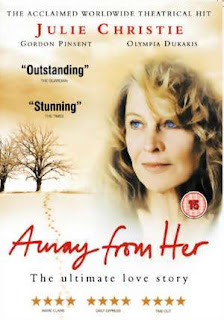
Still, I’d say there are a great many reasons why Julie Christie’s got this one in the bag.
(1) First of all, Christie’s work in "Away From her" is marvelous and memorable. Oscar-worthy without a
doubt.
(2) She plays an Alzheimer’s patient, which means there’s a built-in emotional resonance to the role.
Especially as the vast majority of Academy members are probably baby-boomers (or older). This is an
issue that –one way or another many of them have had to deal with within their families. It’s true that
"Away From Her" presents a rather picturesque, poetic view of the situation, shying away from the
bed-pan realities and traumatic hysteria. Judi Dench’s "Iris" came at least a little closer to that. But the
sheer magnificence of Christie’s performance trumps anything in "Iris".
(3)Christie remains a symbol for her generation. And a great many Academy voters come from that exact
generation. She started as a free-spirited and bracingly beautiful icon of the Swinging 60’s. Her Oscar
win for "Darling" in ’65 was regarded as some sort of changing of the guard – an exhilarating sea-
change as it were. You could practically feel the fresh air as she swept up to the podium in a mini to
collect her award. A Christie victory this year will give Academy members a lovely echo of - not
just her halcyon moments – but their own as well.
(4) It doesn’t hurt that Christie seems to have lived her life with zest, intelligence, grace and dignity. She’s
always radiated an aura of independence and self-sufficiency. Even in the 70’s when she and Warren
Beatty constituted one of Hollywood’s golden couples. Christie also has a reputation as a committed
Liberal – and that plays well with a lot of Academy members.
(5) Her career has been exemplary. She made a quick and seamless transition from 60’s goddess to
respected actor. And she’s never been one for over-exposure. Preferring to lead her (undoubtedly
fascinating) life far from the spotlight. But her artistic choices have been interesting and varied.
The Academy has nominated her a couple of times since "Darling" – for the Altman classic "McCabe
and Mrs. Miller" in the 70’s and for the admirable "Afterglow" in the 90’s. But her resume’s also
peppered with quality titles like "Shampoo", "Heat and Dust". Heaven Can Wait" and "Finding
Neverland". Heck, she’s even played Hamlet’s mother (and quite impressively) in the Kenneth
Branagh version. And, let’s not forget. She’s Lara from "Doctor Zhivago". And that can’t hurt her.
(6) Julie Christie’s also a rather impressive role model – an actress who doesn’t seem too bothered about.
aging. Neither Botox nor cosmetic surgery appear to rank high on the Christie priority list. Yet we should
all be lucky enough to look as good at 66 as Christie does. A marvel of inner and outer beauty. A
pleasure to think about. And certainly still a joy to behold.
(7) Christie’s apparently given out signals that "Away From Her" may be her very last film. Talk about
going out on a high note. And an Oscar victory would only amp it up just that much more. Coming
42 years after her first Academy Award , it should make for a lovely last hurrah.

P.S. If I had a vote, my ballot would look like this:
Actor: Viggo Mortensen "Eastern Promises"
deeply and eerily immersed in his role – and ultimately moving.
Actress: Marion Cotillard "La Vie en Rose"
– a Christie victory will be sweet, no doubt – but I’ve got to admit
this year my heart’s with Cotillard.
Supporting Actor: Hal Holbrook "Into the Wild"
Supporting Actress: Amy Ryan "Gone Baby Gone"
-but that’s because my favorites in these categories
Philip Bosco "The Savages"
And Patricia Clarkson "Lars and the Real Girl"
weren’t even nominated.

P.P.S. Thanks, Ultimate Addict for the recent link. Very kind of you.

Friday, February 01, 2008

I'M SORT OF THERE


If there’s one word that can be applied to what I generally write on this blog, that word might be "unsolicited". Continuing in that onanistic vein, I offer something else no one’s asked for – my opinion of Todd Haynes’ film "I’m Not There". I might also add that it would be no stretch at all to label this opinion of mine as seriously uninformed. I’ve about as much knowledge and appreciation of Bob Dylan as I do of Sanskrit. I am not now – nor have I ever been a Dylan fan. Considering that I grew up in the 60’s – and not in Outer Mongolia – that might seem a little surprising. Add to that the fact that I spent most of my life working in a music store. The truth is Dylan and I seem to have occupied parallel but separate universes. For me, the early sixties were about puberty, girl group records (though that term hadn’t quite been hatched yet) and Motown. The Four Seasons and The Beach Boys joined the party. Then everything pretty much surrendered to the tidal wave of Beatlemania. I enjoyed having long hair, I liked the jewel and peacock colors and the whole mellow-yellow vibe of the late 60’s. The Vietnam War was below the border background noise. Sexual exploration and the suddenly limitless possibilities of life coupled with the youth to enjoy them - that’s what occupied center stage for me. Musically, any folk-ish inclinations I had were more than satisfied by Joni Mitchell and her feathered canyons. The psychedelic stuff was good when you were high. Otherwise, no thanks. The endlessly aggressive whir of grubby macho guitar gods was not my style. And – for me - listening to Bob Dylan’s hectoring off-key whinny was pretty much like sliding down a sixty-foot razor-blade into a pool of iodine. I realize this lays me wide open to charges of shooting the messenger without fully digesting the message. But what I did take in of that message struck me as a kind of inhospitable mix of the obvious and the impenetrable. Undoubtedly some of that impenetrability could’ve been unravelled with a microscopic study of Dylan’s life. But, frankly, I had no interest in going there. I still remember it took a slick studio-created neo-gospel group called The Brothers and Sisters to finally turn me on to the joys of "Lay Lady Lay". (I still love their version). As for latterday Bob Dylan – well, next to Sondheim, say, I saw him as – I don’t know - some sort of musical panhandler. Dylan generally stayed below my radar - occasional crabby caterwauling ,easily tuned out. I realize all this is more likely to erode my own credibility than to call Bob Dylan’s relevance into question. Which is as it should be. Bob Dylan’s work speaks to millions. I’m basically just talking to myself. But, hey, Todd Haynes’ film seems to suggest that relevance is - when all’s said and done – a pretty relative thing.
Now that I’ve seen most of the other big-buzz films of 2007, I thought I’d finally stop dragging my heels and make a duty call at the Dylan fest. ‘Cause I may not like Bob Dylan, but I do like movies. And director Todd Haynes ("Far From Heaven", "Velvet Goldmine") has racked up an awful lot of credit in my bank. As most people know, "I’m Not There"’s an unconventional stab at capturing shades of the Dylan persona - public and private - in film form. Or perhaps an exercise in demonstrating the difficulty of achieving that goal. A number of different actors play Dylan-inspired characters (none of them named Bob Dylan). Time lines are notably flexible; various levels of realism collide and mingle, jostling with scenes that are pure dream-state.
First of all, let me say that "I’m Not There" is a pretty absorbing experience – and it’s very good to look at. Cinematographer Edward Lachman uses black and white and color to equal – and exhilarating – effect.
A slow, tense pan over the faces of what I took to be coal miners lingers insistently in the memory. And in some of the other monochrome segments, Lachman and Haynes deliver images that are Fellini redux in the best possible way.
The various actors offer us a kind of Dylan-as-prism, reflecting aspects of art and humanity, inspiration and impotence. The kaleidoscopic approach allows the singer’s essence to emerge in, among other guises, a black child, a nineteenth century outlaw, a seriously conflicted folksinger and a film star whose coolness ebbs and flows. Only the Richard Gere sequence stumbles , with the actor playing an awkwardly skewed version of Billy the Kid. Heath Ledger portrays the movie star. But recent events make it difficult to form an accurate assessment of his contribution. Ledger’s presence alone conveys a poignancy that probably wasn’t there when the film premiered. But certainly the achingly romantic aura some of us project onto the sixties is palpably captured in the scenes of his whirlwind romance with a French artist. And that’s in spite of the fact that said artist is played by Charlotte Gainsbourg, she of the ever-admonishing look and presence. Gainsbourg looms over a great deal of footage like a disapproving storm cloud. Still, there’s nothing negligible about her – and she clearly means business. Whereas Julianne Moore’s narrative bits and bobs (as a kind of air-brushed Joan Baez) have the (I suspect) unintended feel of an SNL routine. The segments with talented Marcus Carl Franklin , guitar-toting eleven year old riding the rails, are affecting - tender and a little scary. The inner child whose enduring presence is crucial to any artist A tiny figure, feisty, forging on – often framed by ( but never lost in) misty mornings and green-gold vistas. Christian Bale, as folksinger Jack Rollins, deliberately confines the charisma to underground channels, registering best in the born again Christian segment. His gospel number, "Pressing On", delivered in a small chapel, made me remember Ronee Blakley’s Sunday morning hymn in "Nashville". There, Blakley was a beam of white light; Bale’s purity is more a work in progress, speckled and still struggling. Singer John Doe provides the actor with a wonderful vocal match, helping confirm "Pressing On" as the musical segment I liked best in the film. The most celebrated performance of the lot, of course, is Cate Blanchett’s. She’s Jude Quinn, representing the newly electrified Dylan, enraging old fans and butting heads with a growing celebrity and music press, all determined to badger Quinn into delivering digestible sound-bytes. First of all, let me admit that I’ve always had a problem with women playing men. Sometimes men can pull off the woman thing. To me that’s all about tapping into and projecting female gestures. With a woman playing a man, I think it’s more about subtraction. Success depends on suppression and eradication of the feminine essence. A very tall order. Even the best usually just wind up looking like extremely masculine lesbians. Having said this, I’d have to admit that all that’s largely irrelevant in "I’m Not There". The point of the cross-gender casting is not to convince us that Cate Blanchett ‘s a man. But rather to capture the utter strangeness of the figure Dylan presented in the mid-sixties. It’s Dylan as enigma. As insoluble but intriguing cryptogram. Injecting a level of gender ambiguity ‘s a legitimate tactic here. And I have to admit the gambit’s pretty effective. It never comes across as a gimmick – which has got to be considered an accomplishment. And if collaborating with Todd Haynes and company hardly qualifies as working without a net, you’ve got to give the actress credit for fearlessness. Cate Blanchett has a pretty impressive arsenal of acting skills. But she’s also got balls. The verbal sparring between Blanchett and Bruce Greenwood supplies the film with its most captivating stretches. Canadian-born Greenwood (as a BBC interviewer) summons up considerable British authority, accent and all. And he’s even better in some surreal moments, registering disorientation and panic. On paper, I’m sure it made sense, to also cast him as Pat Garrett in the Gere segment. A double nemesis to celebrities – to Billy the Kid in the nineteenth century, to Jude Quinn in the twentieth. But Greenwood’s ZZ Top look just adds to the general lameness of the whole Billy segment. Much of the episode simply comes across as a strained costume party – a sort of magical mystery tour sideshow. I don’t know if I actually saw sword-swallowers. But I do know there was a giraffe. All the sequence lacked was the mimes from "Blow Up" playing a round of invisible tennis. On the other hand, the sixties ambience in the Jude Quinn segments is a great success. The film nails the bunker mentality of the celebrity hotel room under siege – tension, boredom, sniping, chain-smoking at the edge of a live volcano . An atmosphere that could ignite creativity, but is more likely to murder it. I could’ve done without the fast-motion Richard Lester salute as Quinn cavorts with the Beatles. It thuds, I’m afraid. Still the bit only lasts a moment or two. Otherwise the period recreation works beautifully. I was there in the sixties and, for a great deal of this film, I was there again.
There are bleak elements in "I’m Not There". But the movie’s not a downer. Not covered in an oil slick of despair like "No Country for Old Men". It’s more about relativism. About fluid viewpoints. And the impossibility of pigeonholing or defining art or artists or lives. It’s about circularity too. (Richard Gere ends the film just the way Marcus Carl Franklin began it). And – although it probably helps - you don’t have to know a heck of a lot about Bob Dylan to respond to the picture. I’m proof of that. It’s enough to understand that he means a lot to a lot of people. Maybe "I’m Not There"’s about sparks. The kind that shoot into our lives from time to time. Not revelations exactly. Just sparks – that convince us, maybe just for a moment, that revelations are a possibility. "Im Not There" creates its share of sparks.

Monday, January 21, 2008

2007: A LOOK BACK


Although the year 2007 was somewhat traumatic for me personally, movie-wise things were marvelous. TCM finally came to Canada, bringing with it a wagonload of films that’ve been on my wish list forever. Not to mention all kinds of wonderful surprises. As someone said to me this year, "TCM – my new best friend". I’ve also loved being a regular contributor to Stinkylulu’s Supporting Actress Smackdown – a fun feature and one that’s allowed me to discover, rediscover and discuss film performances from the past. As well as enjoying the observations of the site’s other commentators. Along with TCM – or, who knows, maybe because of it – my interest in seeing new movies has also been re-sparked. I finally got a computer this year. So I’ve had access to all the internet buzz as well. Alerting me to the fact that 2007 ‘s been a year highlighted by a real upsurge in the number of quality films on offer. With the Oscars almost here, I thought now would be a good time to list my own favorites from the year. So here goes :


(1) INTO THE WILD
My idea of roughing it is getting locked out of my apartment. So I approached this "man against nature" saga with some trepidation. No need. I’m still not planning on buying a backpack. But any reservations I had about "Into the Wild" have all been swept away. Sean Penn’s lovingly crafted film captures the exhilaration of being on the road along with the beauty and the danger of solitude. Emile Hirsch is bang-on as the go-for-broke wanderer – a perfect fit in appearance, ability and commitment. And sufficiently charismatic to carry off one of the movie’s key concepts - that this boy has an indelible effect on the lives he touches. The look and feel of the piece communicates genuine passion. And director Penn coaxes great performances from his supporting cast , all of which helps bring the enterprise to a moving climax, sweeping viewers out of the theatre on a wave of lump-in-the-throat euphoria.


(2) GONE BABY GONE
After Ben Affleck’s quietly triumphant return to acting as George Reeves in "Hollywoodland", he’s amped up his reputation even further with a fine directorial debut. "Gone Baby Gone" neatly captures a vivid working-class Boston atmosphere,with gritty dialogue and visuals zeroing in on a cast of characters whose lives are changed forever by the kidnapping of a child. A star-making turn by Affleck’s baby brother Casey supplies a distinct new riff on the less-is-more theory. And while the script offers no easy answers, it does present fine acting opportunities, memorably embraced by Ed Harris, Amy Madigan and Amy Ryan.


(3) ATONEMENT
On the face of it, a Merchant-Ivory style nostalgia piece, but this one’s fuelled by deftly manipulated ambiguities. It’s mounted with period splendor and anchored by an achingly good performance from young James McAvoy. Otherwise, the film’s crucial character is Briony, played by three different actresses as she ages from the wilful child who sets events in motion to the elderly woman who brings things to a resonant and surprising conclusion. For that segment, the powers at the helm brought in the heavy artillery – Vanessa Redgrave. And boy, does she deliver!


(4) LA VIE EN ROSE
A creatively composed film biography of French singing legend Edith Piaf, with an amazing central performance by Marion Cotillard. Words like "astonishing" and "jaw-dropping" occur regularly in reviews of this portrayal. And they’re justified. Cotillard captures the fire, the passion, the restless, unruly, self-destructive streak and – perhaps most surprisingly – the earthy genius. It’s a shame the Golden Globes ceremony was cancelled. Cotillard won – but prospective Academy voters weren’t able to see her out of costume and character. She’s a fresh young beauty – about as far in appearance from Piaf as Meg Ryan. Which makes the transformation all the more impressive. The fantastic make-up helps, of course, but it’s just one of the elements the actress uses to create a genuinely unforgettable performance. Obviously, like Edith Piaf, Cotillard has her own inner flame. As for the film itself, its constant time-shifts have been criticized by some as messy and disorienting. But I think they work beautifully as signifiers of Piaf’s own turbulent life. Especially since - in the midst of the swirl - the movie offers such a compelling central figure.


(5) THE SAVAGES

Unflinching - but not unfunny - "The Savages" follows a grown brother and sister as they come to terms - or try to - with their father's descent into dementia-laced old age. Dad's never been a nurturer. And the siblings themselves share a prickly and problematic relationship, captured beautifully by an acerbic script. None of which makes the long forced march through hospital and nursing home corridors any less messy, exhausting or traumatic. It's a gruelling - and for most of us - prophetic odyssey. I wouldn't change a note of the three principal performances. Philip Seymour Hoffman and Laura Linney achieve unbelievable levels of dysfunctional intimacy - brittle and tender and everything in between. Stage veteran Philip Bosco's work as their father is - no two ways about it - devastating - whether angry, muddled or just confronting the frightening fact that he's a catastrophe in progress. Tamara Jenkins deserves massive credit as director and screenwriter. She guides us through a long dark tunnel. And - at the end - more tunnel. But illuminated now by the things we've learned about the Savages and about ourselves.


(6) 3:10 TO YUMA
A solid suspenseful western buoyed by tremendous in-the-groove performances from Russell Crowe and Christian Bale. It may not bring back the genre but it’s an admirably put together stand-alone achievement.


(7) AWAY FROM HER
Sarah Polley deserves kudos for (a) writing a sensitive screen adaptation of Alice Munro’s novel about an Alzheimer’s patient (b) choosing Julie Christie to star in it and (c) guiding the actress to the most fully accomplished performance of her long and intriguing career. Christie’s incandescent – smart, timelessly beautiful, scared, intriguingly ambiguous and quietly heart-wrenching.


(8) SWEENEY TODD
It’s neither the disaster some were predicting or the classic others were hoping for. But it is a worthy film version of Sondheim’s stage play. Tim Burton’s typical visual and tonal touch remains distinctive. But he’s taken a step forward here. Things seem less juvenile, a little more substantial. The orchestrations are wonderful. As for the performances, Johnny Depp and Helena Bonham Carter acquit themselves well – acting and singing. Sacha Baron Cohen, Timothy Spall and Alan Rickman are – as usual - tough sells for me. But child actor Edward Landers carves out an impressive niche for himself, providing "Sweeney Todd" with some of its most effective moments – musical and dramatic.


(9) BEOWULF
My feelings about this one are a little off-kilter. I enjoyed it much more than I expected to. I figured I was in for another "300" – all strident pro-war rhetoric and homophobia. Instead, I got a cleverly reconstituted take on a famously impenetrable literary classic. I want to recommend "Beowulf" – yet I find I must make this proviso. See it in IMAX 3D if you possibly can. The visuals are frankly astounding. I couldn’t get over the ground-level shots of approaching and departing figures, not to mention the extensive and eye-popping action finale. Having seen it in IMAX 3D, I’m reluctant to watch it again on DVD. It does have a surprisingly literate script – and the motion capture images are certainly the best I’ve ever seen. But I’m still afraid a small-screen, non-stereoscopic "Beowulf" will be a severely diminished kettle of fish. But "Beowulf" does exist in IMAX 3D. That’s what I saw. And that’s what I’m ranking as one of the year’s top 10 movie experiences.


(10) JUNO
Show-offy, yes – and maybe not quite as smart as it thinks it is. But it does come close. And frankly there’s too much good stuff here to ignore. Ellen Page has a bright future, but I suspect this will probably remain her signature role. The character – with her slipstream of ultra-quotable dialogue – is already a pop culture icon. Screenwriter Diablo Cody’s become a media darling – and an Original Screenplay Oscar’s a very real possibility. She’s earned it - this piece bubbles with fresh surprises. Nicest of all these, perhaps – the wonderful parts she’s written for Jennifer Garner and Jason Bateman, both of whom make the absolute most of the material with skills we didn’t even know they had.


Also worth a comment or two:


EASTERN PROMISES
The atmosphere of insistent dread that characterizes so many Cronenberg films is certainly present here. Yet "Eastern Promises" stands as the director’s most accessible and possibly his most satisfying work.
It’s also a career high-point for Viggo Mortensen – deeply fascinating and so immersed in his Russian mobster role it’s uncanny. The actor’s missed out on Oscar nominations before. But ignoring this performance would represent a real miscarriage of justice. I’ve always thought Mortensen and Ed Harris came from the same gene pool. Those eyes, those jawlines – not to mention the fact that both bristle with the same kind of man’s man charisma. And – of course – they’re both exceptional actors. The two appeared together a couple of years ago in Cronenberg’s "A History of Violence". And I could never undertsand why Harris and William Hurt didn’t exchange roles. I know I’m in the minority here. But I thought Hurt’s awkwardly eccentric performance as Mortensen’s gangster brother was terrible. As one internet pundit described it, Hurt plays it "like a flamboyant drag queen who’s had a stroke." Let’s face it, Mortensen and Harris were born to play brothers. As it happens the pair are co-starring in an upcoming project (with Renee Zellweger). It’s a western called "Appaloosa" and Harris is directing too. He and Mortensen probably aren’t playing brothers. But, whatever the case, it’ll definitely be great to see these two – who’ve both contributed stunning work in 2007 – working together again.


ELIZABETH: THE GOLDEN AGE
So sue me. I enjoyed it (and I thought the first one - in ’98 - was a yawn). I’ve been slow to warm to Blanchett. For my money, she provided the one sour note in "The Talented Mr.Ripley". And the Oscar for her Kate Hepburn impersonation was just uncalled for. But, you know, she was pretty terrific in last year’s "Notes on a Scandal". And with her second stab at Elizabeth, Blanchett’s totally in control. It’s practically become de rigeur to dump on this project. But – even with the spotlight-chasing splendor of the costumes and sets – Blanchett still maintains full and glorious control of center stage. A tour de force. A lot of bloggers seem to be worried the actress might just grab an Oscar nomination for it. I say she’s earned it.
And a final word of praise for the film’s other royals – Jordi Molla’s King of Spain and Samantha Morton’s Queen of Scots. They’re both eminently and regally kick-ass.


STARDUST
So much is right about this extravagant and rather ingenious fantasy that I’m willing to overlook the overdose of tired Monty Python style comedy and the painfully awkward De Niro performance ( as a swishy pirate). The story moves at a furious clip; it looks great and leading man Charlie Cox is a fabulous find. So, by the way, is Ben Barnes, who appears in the prologue as Cox’s father. And both –as it happens – are now toplining expensive new projects. Michelle Pfeiffer’s wicked witch may fall just the tiniest bit short so far as vocal projection is concerned – but her energy is beautifully pitched and visually she’s perfection. Pfeiffer's taut, almost scary beauty – and the fearless use she makes of it – anoint the role as one of Stardust"’s most memorable features.


GANDHI MY FATHER
Hardly even seen here, this Indian film is a handsomely produced, well-acted exploration of the troubled
relationship between the famous activist and his son. The movie India selected to represent them at the Oscars this year, "Eklavya – The Royal Guard", didn’t even make the final cut. "Ghandi My Father" would have been a much wiser choice. Of particular note in the film is Darshan Jariwala’s exceptional work as Gandhi – to my mind, a far more intriguing creation than Ben Kingsley’s award-laden turn from the 80’s.


NO COUNTRY FOR OLD MEN and THERE WILL BE BLOOD
Both ambitious films – to me both compromised by crucially misjudged performances. I’ll admit I wasn’t comfortable with the shift in focus near the end of "No Country". But much of that had to do with the fact that I didn’t buy into Tommy Lee Jones’ overly folksy mannerisms. I simply found him an unconvincing spokesman for the critical theme of despair in the face of pervasive evil. I wasn’t that transfixed with Bardem’s intense but one-note villain either – a sort of relentless land-based version of the shark from "Jaws". Kelly Macdonald impressed me retroactively when I found out her southern fried trailer park Carla Jean was hiding a Scottish accent. But I still didn’t buy her last minute transformation into existential debater. Certainly most of the film works very well as a tough, suspenseful crime drama. The transition to out and out meditation on life simply required more – or better - juice than I found in most of these performances. What I did admire – without reservation – was Josh Brolin’s marvelous work as the man in the middle of it all. 2007’s been a landmark year for him. And - for Brolin - the future looks bright.
"There Will Be Blood" is also impressive on many levels. It looks terrific; I love the score. And it definitely hurtles along with a great forward momentum. I’m afraid I’m in that small camp (it does exist, though) of people who weren’t all that sold on Daniel Day-Lewis’ interpretation of Daniel Plainview. I know Plainview despises people; I know he doesn’t empathaize with them. So when he addresses them, he’s not relating, he’s just performing. But I guess it’s DDL’s performance of the performance that I find unnecessarily actorish, overblown and unconvincing. Actors can – and do – deliver stylized performances, inundating audiences with acres of verbiage, their characters duplicitous, calculating. And yet they can still sound like characters – not like actors. Peter O’Toole’s over the top but utterly convincing in "The Lion in Winter". Kevin Spacey’s motor-mouth sales-pitches in "The Big Kahuna" are pretty much one big bag of baloney. But he sounds real delivering them. There’s just too much self-conscious artifice dripping from Day-Lewis’ Plainview. Of course, everyone hears John Huston in the performance. But I also sense a visual/ vocal mix of the senior Huston (Walter) and Sam Elliott. Both of these men have done great work. But both have exhibited an occasional weakness for self-conscious, self-indulgent hamming too. Check out Elliott in this year’s gilded turkey "The Golden Compass". Daniel Day-Lewis has power and skill to spare. I don’t deny that. I just think he’s misjudged his effects here – and it undermines the project. For me, the part doesn’t need a different actor, just a different approach. This is, as I indicated, very much a minority opinion. Destined to be drowned out, I’m sure, in a sea of wild applause, when Daniel Day-Lewis accepts what’s looking to be an inevitable Best Actor Oscar next month. Young Paul Dano plays Plainview’s nemesis, Paul Sunday – and I love the ambiguity of the fact that the script never commits as to whether Paul and Eli are actually the same person. Unfortunately, I didn’t really respond to Dano’s (to me) amateurish acting. This is someone who performed memorably as a child in "L.I.E.". Not so much in "Little Miss Sunshine", where he was the least impressive member of a generally over-rated cast. In "There Will Be Blood", he seems to have regressed even further. Certainly he’s unequipped for an acting duel with Daniel Day-Lewis. So with DDL playing to the balcony and Dano way over his head, the dynamic required to make the piece fly never seems to materialize. Still, as I said, the project’s ambitious and the film is accomplished on many levels. A substantial piece of work – but a flawed one.


ZODIAC and A MIGHTY HEART
"Zodiac"’s a painstaking police procedural – far too long and too restrained for its own good. It also misuses some fine actors. Jake Gyllenhaal pretty much flatlines his way through the picture while Robert Downey disappoints big-time with a show-offy "ain’t I cool" turn that isn’t cool at all.
Angelina Jolie immerses herself fully in "A Mighty Heart", incidentally illustrating once more her flair for accents. But in the end this is just another police procedural. Carefully made, respectful to its subject but strangely uncompelling.


LARS AND THE REAL GIRL
I must admit I expected something edgier (and I’m not that edgy). Probably something funnier, too.
There’s nothing wrong with the premise – that each person has to find his own road to functionality – and that it’s better to support people than to deride and ostracize them. Better for them. Better for you.
But "Lars" is surprisingly soft-centred and sentimental, never emerging as a very convincing argument to support its theme. At root, the film itself is rather non-functional. Imagine a Disney movie about a blow-up sex doll. Timid small-town loner Lars sends away for one (named Bianca) and basically embarks on a platonic romance with her. Bianca becomes a kind of Pollyanna glad girl to the whole (inconceivably supportive) town . It doesn’t sound like it would work. And it doesn’t, as far as I’m concerned. Which is not to say the film doesn’t offer some very good acting. Ryan Gosling does fine as Lars – his tics and mannerisms never seem false or actorish. He makes the character live and breathe. It just seems there’s very little air left for the rest of the town. Except for Patricia Clarkson. I didn’t even know she was in it. Certainly her performance hasn’t stirred up much fuss in the press. But I’d rank it as – possibly – her best work. Clarkson’s small-town doctor/psychologist is a fascinatingly original creation – a kind of deeply compassionate deadpan. Tremendously wise and tremendously droll. I don’t know quite how she pulls it off. I don’t think she ever raises her voice. But congratulation to her. ‘Cause she delivers one of 2007’s very finest acting achievements.


A little bit more…


I’ve dealt with "Hairspray" and "Enchanted" in an earlier post. Both have enjoyable elements. Neither’s a classic. Bottom of the barrel items for the year included "The Golden Compass"( a titanic waste of time and money), "300" ( loud and quite offensive), "The Last Legion" (Aishwarya Rai , Colin Firth and Ben Kingsley trapped in an insufficiently funded throwback to 60’s peplum) - and "Sunshine", pretentious tedium dressed up as sci-fi.


And going from the worst back to the best, here’s a breakdown of my


FAVORITE PERFORMANCES OF 2007

Best Actor
1. VIGGO MORTENSEN "Eastern Promises"
2. Philip Seymour Hoffman "The Savages"
3. James McAvoy "Atonement"
4. Emile Hirsch "Into the Wild"
5. Josh Brolin "No Country for Old Men"


Honorable Mention:
Russell Crowe "3:10 to Yuma"
Christian Bale "3:10 to Yuma"
Johnny Depp "Sweeney Todd"
Casey Affleck "Gone Baby Gone"
Charlie Cox "Stardust"
George Clooney "Michael Clayton"
Gordon Pinsent "Away from Her"
Ryan Gosling "Lars and the Real Girl"


Best Actress
1. MARION COTILLARD "La Vie en Rose"
2. Julie Christie "Away from Her"
3. Laura Linney "The Savages"
4. Ellen Page "Juno"
5. Cate Blanchett "Elizabeth: The Golden Age"

Honorable Mention:
Helena Bonham Carter "Sweeney Todd"
Ashley Judd "Bug"


Best Supporting Actor
1. PHILIP BOSCO "THE SAVAGES"
2. Ed Harris "Gone Baby Gone
3. Darshan Jariwala "Gandhi My Father"
4. Hal Holbrook "Into the Wild"
5. Edward Landers "Sweeney Todd"


Honorable Mention:
Armin Mueller-Stahl "Eastern Promises"
Jason Bateman "Juno"
J.K. Simmons "Juno"
Michael Cera "Juno"
Jean-Pierre Martins "La Vie en Rose"
William Hurt "Into the Wild"
Jordi Molla "Elizabeth: The Golden Age"
Harry Connick Jr. "Bug"
Dillon Freasier "There Will Be Blood"
Kevin J. O'Connor "There Will Be Blood"
Sydney Pollack "Michael Clayton"
Ranvir Shorey "Aaja Nachle"


Best Supporting Actress
1. PATRICIA CLARKSON "Lars and the Real Girl"
2. Romola Garai "Atonement"
3. Jennifer Garner "Juno"
4. Samantha Morton "Elizabeth: The Golden Age"
5. Vanessa Redgrave "Atonement"


Honorable Mention:
Amy Madigan "Gone Baby Gone"
Catherine Keener "Into the Wild"
Amy Ryan "Gone Baby Gone"
Bhumika Chawla "Gandhi My Father"
Allison Janney "Juno"
Olivia Thirlby "Juno"

Wednesday, January 16, 2008

A TALE OF TWO MUSICALS: HAIRSPRAY & ENCHANTED


Nikki Blonsky (hello, goodbye) is perfectly okay in "Hairspray". But I found myself constantly wishing for Ricki Lake (the original and definitive Tracy Turnblad). Which, in turn, reminded me of a friend who, on seeing once ubiquitous third stringer Nydia Westman dither into view in some 30’s film, said quietly, "Oh, for Una Merkel…). Not that my friend’s particularly stuck on Merkel. He can take her or leave her, I suppose. But Westman’s a kind of feathery Merkel clone. She and Una look alike, sound alike – and both project the same sort of spinsterish second banana persona. They mine the same hit-and-miss terrain. Two scrawny hens eternally pecking the hard ground, foraging for laughs, all too often settling for less. But Merkel does it better. With perhaps a 60-40 success ratio. For Westman, it’s maybe 20-80. And consequently she ends up being defined by that difference. If you’d never seen Merkel, you might just accept Westman. But knowing there’s someone out there who’s simply better at selling the same kumquats, you wind up just putting up with her. It gives Westman the perpetual air of an also-ran. The Ricki-Nikki equation’s about the same. Ricki’s pretty good. Nikki’s just good enough.
"Hairspray" itself is reasonably diverting in spots. The choreography’s lively in the most neutral sense of the word – a lot of activity and movement, little of it compelling (although the "Welcome to the 60’s" number scores nicely). But a high-profile movie musical inevitably attracts comparisons with the best in the genre. "Hairspray" lacks the melodramatic flourish and visual ingenuity of "Dreamgirls", the free-wheeling creativity of "A Hard Day’s Night" or the disco ball perfection of "Saturday Night Fever".
Supporting players Amanda Bynes and James Marsden do extremely well in parts that - in less capable hands – might easily have disappeared into thin air. And teen heart-throb Zac Efron nails it, too – injecting just the right amount of gingerbread yumminess into dialogue like "Hope I didn’t dent your do, little darlin’". But the showier roles (like Michelle Pfeiffer’s surprisingly embarrassing villainess Velma) tend to fizzle. Allison Janney’s all over the place. One moment awfully good, the next just awful. Queen Latifah maintains an even keel – but while that means no lows, it also means no highs. And, by the way, if she’s going to channel Pearl Bailey (she did it in "Chicago" too) why not just give us a Bailey biopic and get it out of her system once and for all. That picture might be fun. Even good with the right salty script.
It would have to be a better script than "Hairspray"’s. The whole enterprise lacks any real ambition. Like "Grease", it’s aimed at – if not the lowest common denominator, then something damn close to it – say, people who think the Fonz is funny. Which kind of brings us to John Travolta. I know he wasn’t Fonzie. But some similarly duck-tailed greaseballs figure rather prominently in his resume. For "Hairspray" he trades in the ducktail for a bee-hive. But to debatable advantage. It’s kind of a tradition that Edna Turnblad be portrayed by a man. But that tradition, established by Divine amd Harvey Feierstein, has always hinged on a flamboyant drag-queen approach. Travolta decides to go for low-key naturalism and diffidence - in a way defeating the purpose of cross-gender casting, something that inherently calls attention to itself. The attempt at a softer, gentler Edna Turnblad is also compromised by Travolta’s profoundly creepy make-up. Any closer together and those eyes would make Edna a Cyclops. If warm and fuzzy womanliness was the goal, they might’ve considered casting an actual woman. I don’t know, let’s say Delta Burke. Don’t know if she can dance. But surely there’s some sweet, talented, full-figured older actress out there who can shake a leg and tug a heartstring. Still, I suppose the Travolta name helped sell tickets (something got people to go to "Wild Hogs"). Because, whatever its actual merits, "Hairspray" has made money. You’ve got to hand it to Travolta for one thing, too. He’s a terrific dancer. And even encased in that hideously uncomfortable looking fat-suit and make-up he still manages to strut his stuff pretty impressively. Otherwise, this strange semi-mutant Edna needs to go back to Metaluna for some serious re-tooling.
……………………………………………………………………………..


"Enchanted"’s another musical that’s bubbled along nicely at the box-office this year. As most people know by now, the first twenty minutes or so are presented as an old –style animated fairy tale. ("Sleeping Beauty" old, which is to say Disney meets Hanna-Barbera – not the Germanic jewel-box loveliness of "Snow White" ). A wicked queen throws heroine Giselle down a well, from which she emerges (at the other end) as a live-action Amy Adams stranded in modern-day Manhattan. The Big Apple’s presented as a sort of Hallmark Cards version of mean streets (this is, after all, a Disney musical). Numerous characters from the animated world pursue Giselle into her new environment to either help or hinder her. Romantic complications, some songs and a climax rich in special effects (a gigantic CGI dragon climbing up the Chrysler Building in a thunderstorm) bring it all to a reasonably satisfying conclusion.
Susan Sarandon’s passably good as the wicked queen/witch (her make-up in both guises is fabulous). But somehow, considering it’s the great Sarandon, I expected more. One yearns for – but doesn’t quite get - the voice summoned up from the pits of Old Vic Hell that, say Judy Davis or Saffron Burrows could’ve probably delivered. I mean even after all these years, the voices of the animated villainesses in Disney’s Snow White (Lucille LaVerne) and "Sleeping Beauty" (Eleanor Audley) are still good for a few uneasy shivers. Nevertheless, as I say, Sarandon gets the job done. James Marsden (the film’s Prince Edward i.e.Charming) is a fine actor and singer with matinee idol good looks. Unfortunately script and direction encourage him to play arch and he obliges. But the man’s better – with considerably less scope and screentime – in "Hairspray". "Enchanted" presents Patrick Dempsey as a Manhattan yuppie/single parent and Giselle’s initially reluctant protector – wisely allowing him to play to his strengths – solid, understated masculinity laced with a kind of genial uptightness. He invariably hits the right note (and though his actual singing’s kept to a minimum, he even handles that part nicely). Having seen "Sweeney Todd" and "Enchanted" within a week of one another, I’ve been subjected to enough massive close-ups of Timothy Spall’s gnome-like face and endless "comic" busy-work to last me a lifetime – and then some. Me no like. The actress who plays Dempsey’s high-powered New York girl-friend seems oddly cast – a sort of Sandra Bernhard without the funny. Plus I believe she’s a singer – yet I don’t recall her singing a note in "Enchanted". And surely the gigantic Disney machine should be able to cough up one talented, appealing tot without much trouble. Something went wrong here. Little Rachel Covey remembers her lines but looks fretful and constipated saying them. Don’t give up your day job.
And then there’s Giselle herself – Amy Adams, the girl who’s had critics all over the world penning love letters instead of reviews. I’m not quite that beguiled. She’s a sort of Sandy Duncan (albeit Sandy Duncan on a very good day) – a pleasant enough singer, a good enough actress, perky (not quite – but almost – to a fault). But I like my singing fairy tale princesses uber- beautiful. And Adams is no Kathryn Grayson. No Jane Powell. No Lesley Ann Warren. More than presentable ,for sure. Fairyland Princess, I don’t think so.
Like "Hairspray", most of the picture’s painless. But once the high-concept premise is established, the script doesn’t spread enough pixie dust on the cliches to get them air-borne. Still, "Enchanted" does manage to soar during one extended musical number. "That’s How You Know" actually succeeds in capturing the giddy feel-good glory of the best movie musicals. It’s not that the song’s that great (though it’s nice). But the arrangements’s insanely infectious – all syncopation and steel-drums. And the wide-open Central Park setting allows for plenty of well-deployed extras to keep the party cooking. Along with Adams legitimately coming into her own as the sparkling centre-piece of it all. Frankly I never wanted it to end. And I’ve already bought the soundtrack CD just to hear the song again. That five minutes or so of euphoria is more than enough to give "Enchanted" the edge over "Hairspray". After all – I don’t know about you – but even a mini-shot of euphoria can pretty much make my day.

Monday, December 31, 2007

I MAKE IT TO VEGAS - 43 YEARS LATE

Finally collided with VIVA LAS VEGAS(1964) on TCM the other day. As a non-Elvis fan, I’ve never gotten around to catching it. But over the years dribs and drabs of info have trickled my way, indicating that this one’s a cut above the others. And I do like the title tune. Even though I’d prefer fewer low-rent guitar licks in the arrangement and someone other than Elvis singing it. Yes, I know that’s heresy. But generally Presley’s singing voice doesn’t appeal to me that much. The tone often seems false and affected – artificially lowered and over-drawled. Like the orater who drops his normal speaking voice when he’s speechifying and launches into something quite different . Usually a pretty good tip-off that actual sincerity’s just left the room. Of course, we’re not talking about the kind of preposterous disconnect represented by, say, Jim Nabors’ singing (ridiculously pompous) and his speaking ( aw-shucks, ma’am, it’s me Gomer). But I still find there’s an element of strained artifice in much of Elvis’ musical output. And so many of the songs themselves – particularly the film songs – are hopelessly trivial to begin with. But I suspect I’m out on a limb here. Just a voice kvetching in the wilderness. And to be fair , in VIVA LAS VEGAS, Elvis sounds flat-out wonderful on the (previously unknown to me) song I NEED SOMEBODY TO LEAN ON. Getting back to the title tune, it’s maintained a pretty tenacious hold on popularity over the years. And certainly should have been at least a Best Song Oscar nominee in ’64. But, of course, in those days the Academy was so Old School, they wouldn’t nominate anything with even a suspicion of rock’n’roll attached to it. Maybe Buble will get around to recording it one day.
Anyway, I have to admit the film is a cut above. Not because of the screenplay, of course. That’s as vapid and witless as all the King’s other 60’s scripts. In this case, though, VEGAS represents one of the few times Elvis worked with a director who knew something about musicals – MGM veteran George Sidney (THE HARVEY GIRLS, SHOW BOAT). Sidney knew how to take an onscreen ensemble and make it look dynamic. He manages to introduce some life and movement into several of the musical set-pieces, nicely synchronizing various elements.
But it’s Elvis’ teaming with Ann-Margret that really works like a charm. Their individual screen images, both built largely on tackiness in the 60’s, somehow coalesce, achieving a kind of transcendence, the whole definitely greater than its parts. Quite a synthesis really. Almost inexplicable but undeniably successful. AM’s put-on pussycat sexiness (her stock in trade in the 60’s) and Presley’s fangless growl feed on each other to create something that actually produces genuine honest-to-God sparks. Sidney saw this and wisely injected AM into several of Elvis’ numbers. She even gets a couple of solos. Unusual this. Generally the mandate of the girl in an Elvis film is just play hard to get for a reel or two, keep your hair-do unmussed and spend most of the time at a ring-side table smiling and nodding as Elvis does his King thing. But AM’s right in there up to her thighs – and considerably higher, come to think of it. Shaking her booty and everything else and exercising that distinctive pout-shout of hers with a vengeance. When the duo join forces, lame songs (COME ON EVERYBODY) and blah arrangements of good ones (WHAT’D I SAY) come alive in spite of themselves. AM even gets Elvis matching dance steps with her. It’s really a shame they didn’t make more movies together. They could’ve been the hood ornament MacDonald/Eddy or Astaire/Rogers of the 60’s. But, of course, Elvis’ management had no interest in sharing the spotlight or stretching the boundaries of Presley’s tired movie formula. So it didn’t happen. There seems to have been a quasi-attempt to create the same kind of dynamic a couple of years later in SPEEDWAY with the casting of Nancy Sinatra, who, at the time, was successfully pitching a tough sex-kitten image on record. In films, however, she photographed weirdly, couldn’t act and wasn’t in Ann-Margret’s league as a dancer. Leaving SPEEDWAY pretty much just sitting there - a tired souffle that rose no higher than Elvis’ other duds.
How Presley’s screen image would have developed had he lived – and filmed – is, of course, a matter of conjecture. In subsequent years, Ann-Margret definitely grew as an actress (she’s special in TOMMY and outright fabulous in JOSEPH ANDREWS). And – to this day – she continues to project an inner and outer beauty. If you want to see the best of Elvis, the movie star, check out one of his 50’s films . LOVING YOU, JAILHOUSE ROCK and KING CREOLE are all pretty okay. But VIVA LAS VEGAS is worth investigating as the one film where the King had a totally compatible Queen beside him. Ann-Margret embodies the fun of fuzzy dice dangling and bobbing from a rear-view mirror during a drag race. Waking and shaking up her male Sleeping Beauty with some high-energy fizz, the lady’s mucho simpatica. She and Elvis have an easy rapport; both genuinely appear to enjoy the chemistry they’re creating. And it’s hard not to enjoy it right along with them. Why fight it?

Monday, September 10, 2007

Oops, I did it again (Another list)

It’s List Time. I can’t stop myself. This one’s all about the 30’s, 40’s and 50’s – the bubble and boom years of Old Hollywood. I’ve rustled up a roster of 150 gilt-edged portrayals from the era, arranged into six categories:

the top 25 (my choice) in each division *chronologically arranged

I’ve been plunged, immersed and dunked to the dorsals in movies since I was a polliwog. So there’ve been plenty of blue-ribbon candidates to sift through. And certainly a lot I hated to leave out. Can’t believe I had to pass on the Connie and Thelma tag-team from A Letter to Three Wives. Not to mention Evelyn Varden’s nasty little snake-bite of a performance in Pinky. It doesn’t seem right that Simone Simon’s sad, purring Irina’s nowhere to be found. And what? No Alida Valli? No Florence Bates- anywhere? But the competition was just too fierce. Anyway, here they are – my picks for the era’s crème de la crème. Point of interest – of the 150, only 32 managed Oscar nominations. A mere 10 actually won. Nevertheless, they’re all gifts that keep on giving. A thousand years from now, I suspect, someone – human I hope – will be mulling over many of the same performances (in who knows what format), emitting whatever passes for a murmur of pleasure in 3007 and getting ready – of course - to make a list.

Outstanding ACTRESS Performances - The 1930s

1. MARLENE DIETREICH “The Blue Angel”(‘30-Josef von Sternberg)

2. JOAN BLONDELL “Blonde Crazy”(‘31-Roy Del Ruth)
3. NANCY CARROLL “Hot Saturday”(‘32-William A.Seiter)
4. JOAN CRAWFORD “Rain”(‘32-Lewis Milestone)
5. CAROLE LOMBARD “No Man of Her Own”(‘32-Wesley Ruggles)
6. LORETTA YOUNG “Play Girl”(‘32-Ray Enright)
7. MARION DAVIES “Peg O’My Heart”(‘33-Robert Z.Leonard)
8. LORETTA YOUNG “She Had to Say Yes”(‘33-Busby Berkeley)
9. GRETA GARBO “The Painted Veil”(‘34-Richard Boleslawski)
10. MAUREEN O’SULLIVAN “Tarzan and His Mate”(‘34-Cedric Gibbons,Jack Conway)
11. NORMA SHEARER “The Barretts of Wimpole Street’(‘34-Sidney Franklin)
12. MARGARET SULLAVAN “Little Man What Now”(‘34-Frank Borzage)
13. JEAN ARTHUR “The Whole Town’s Talking”(‘35-John Ford)
14. KATHARINE HEPBURN “Alice Adams”(‘35-George Stevens)
15. JEAN ARTHUR “Mr.Deeds Goes to Town”(‘36-Frank Capra)
16. JEANETTE MacDONALD “Rose Marie”(‘36-W.S.Van Dyke)
17. ROSALIND RUSSELL “Craig’s Wife”(‘36-Dorothy Arzner)
18. IRENE DUNNE “The Awful Truth”(‘37-Leo McCarey)
19. LUISE RAINER “The Good Earth”(‘37-Sidney Franklin)
20. JEANETTE MacDONALD “Sweethearts”(‘38-W.S.Van Dyke)
21. NORMA SHEARER “Marie Antoinette”(‘38-W.S.Van Dyke)
22. JEAN ARTHUR “Only Angels Have Wings”(‘39-Howard Hawks)
23. JUDY GARLAND “Babes in Arms”(‘39-Busby Berkeley)
24. VIVIEN LEIGH “Gone with the Wind”(‘39-Victor Fleming)
25. CAROLE LOMBARD “Made for Each Other”(‘39-John Cromwell)

Outstanding SUPPORTING ACTRESS Performances - The 1930s

1. LOUISE CLOSSER HALE “Shanghai Express”(‘32-Josef von Sternberg”)

2. ALISON SKIPWORTH “Night After Night”(‘32-Archie Mayo)
3. MAE WEST “Night After Night”(‘32-Archie Mayo)
4. RUTH DONNELLY “Footlight Parade”(‘33-Lloyd Bacon)
5. DORIS KENYON “Counsellor-at-Law(‘33-William Wyler)
6. KATHLEEN HOWARD “It’s a Gift”(‘34-Norman Z.McLeod)
7. MONA BARRIE “King of Burlesque”(‘35-Sidney Lanfield)
8. ALICE BRADY “Gold-diggers of 1935”(‘35-Busby Berkeley)
9. GLENDA FARRELL “Gold-diggers of 1935”(‘35-Busby Berkeley)
10. HATTIE McDANIEL “Alice Adams”(‘35-George Stevens)
11. UNA O’CONNOR “Bride of Frankenstein”(‘35-James Whale)
12. EDNA MAY OLIVER “David Copperfield”(‘35-George Cukor)
13. MARY ASTOR “Dodsworth”(‘36-William Wyler)
14. JANE DARWELL “Ramona”(‘36-Henry King)
15. MARCIA MAE JONES “These Three”(‘36-William Wyler)
16. ALMA KRUGER “These Three”(‘36-William Wyler)
17. DORIS NOLAN “Holiday”(‘38-George Cukor)
18. DITA PARLO “La Grande Illusion”(‘38-Jean Renoir)
19. OLIVIA de HAVILLAND “Gone with the Wind”(‘39-Victor Fleming)
20. KAY FRANCIS “In Name Only”(‘39-John Cromwell)
21. MARGARET HAMILTON “The Wizard of Oz”(‘39-Victor Fleming)
22. HATTIE McDANIEL “Gone with the Wind”(“39-Victor Fleming)
23. BUTTERFLY McQUEEN “Gone with the Wind”(‘39-Victor Fleming)
24. HELEN PARRISH “First Love”(‘39-Henry Koster)
25. LUCILE WATSON “Made for Each Other”(‘39-John Cromwell)

Outstanding ACTRESS Performances - The 1940s

1. BETTE DAVIS “The Letter”(‘40-William Wyler)

2. IRENE DUNNE “My Favorite Wife”(‘40-Garson Kanin)
3. ROSALIND RUSSELL “His Girl Friday”(‘40-Howard Hawks)
4. JEAN ARTHUR “The Devil and Miss Jones”(‘41-Sam Wood)
5. JENNIFER JONES “The Song of Bernadette”(‘43-Henry King)
6. INGRID BERGMAN “Gaslight”(‘44-George Cukor)
7. CLAUDETTE COLBERT “Since You Went Away”(‘44-John Cromwell)
8. IRENE DUNNE “Together Again”(‘44-Charles Vidor)
9. JUDY GARLAND “Meet Me in St.Louis”(‘44-Vincente Minnelli)
10. ANN SAVAGE “Detour”(‘45-Edgar Ulmer)
11. GENE TIERNEY “Leave Her to Heaven”(‘45-John M.Stahl)
12. JOAN CRAWFORD “Humoresque”(‘46-Jean Negulesco)
13. ELEANOR PARKER “Of Human Bondage”(‘46-Edmund Goulding)
14. GENE TIERNEY “The Razor’s Edge’(“46-Edmund Goulding)
15. JOAN BENNETT “The Macomber Affair”(‘47-Zoltan Korda)
16. JANE GREER “Out of the Past”(‘47-Jacques Tourneur)
17. DOROTHY McGUIRE “Gentleman’s Agreement”(‘47-Elia Kazan)
18. MARLENE DIETRICH “A Foreign Affair”(‘48-Billy Wilder)
19. IDA LUPINO “Road House”(‘48-Jean Negulesco)
20. MOIRA SHEARER “The Red Shoes”(‘48-Michael Powell)
21. INGRID BERGMAN “Stromboli”(‘49-Roberto Rossellini)
22. PEGGY CUMMINS “Gun Crazy”(‘49-Joseph H.Lewis
23. BETTE DAVIS “Beyond the Forest”(‘49-King Vidor)
24. OLIVIA de HAVILLAND “The Heiress’(‘49-William Wyler)
25. VALERIE HOBSON “The Rocking Horse Winner”(‘49-Anthony Pelissier)

Outstanding SUPPORTING ACTRESS Performances - The 1940s

1. JANE DARWELL “The Grapes of Wrath”(‘40-John Ford)

2. FRIEDA INESCOURT “Pride and Prejudice”(‘40-Robert Z.Leonard)
3. GAIL PATRICK “My Favorite Wife”(‘40-Garson Kanin)
4. SARA ALLGOOD “How Green Was My Valley”(‘41-John Ford)
5. SPRING BYINGTON “The Devil and Miss Jones”(‘41-Sam Wood)
6. DOROTHY COMINGORE “Citizen Kane”(‘41-Orson Welles)
7. JOAN LESLIE “High Sierra”(‘41-Raoul Walsh)
8. ANNE BAXTER “The Magnificent Ambersons”(‘42-Orson Welles)
9. NANCY COLEMAN “King’s Row”(‘42-Sam Wood)
10. DAME MAY WHITTY “Mrs. Miniver’(‘42-William Wyler)
11. JEAN BROOKS “The Seventh Victim”(‘43-Mark Robson)
12. GABRIELLE DORZIOT “Le Baron Fantome”(‘43-Serge de Poligny)
13. RUTH HUSSEY “Tender Comrade”(‘43-Edward Dmytryk
14. MARY ASTOR “Meet Me in St.Louis”(‘44-Vincente Minnelli)
15. ANGELA LANSBURY “Gaslight”(‘44-George Cukor)
16. HATTIE McDANIEL “Since You Went Away”(‘44-John Cromwell)
17. ELIZABETH RUSSELL “Curse of the Cat People”(‘44-Robert Wise,Gunter von Fritsch)
18. ROSALIND IVAN “The Corn is Green”(‘45-Irving Rapper)
19. LILLIAN GISH “Duel in the Sun”(‘46-King Vidor)
20. LEOPOLDINE KONSTANTIN “Notorious”(‘46-Alfred Hitchcock)
21. DOROTHY MALONE “The Big Sleep”(‘46-Howard Hawks)
22. MARTITA HUNT “Great Expectations”(‘47-David Lean)
23. HELEN WALKER “Nightmare Alley”(‘47-Edmund Goulding)
24. NATALIE WOOD “Miracle on 34th Street”(‘47-George Seaton)
25. HOPE EMERSON “Cry of the City”(‘48-Robert Siodmak)

Outstanding ACTRESS Performances - The 1950s

1. CORNELL BORCHERS “The Big Lift”(‘50-George Seaton)

2. BETTE DAVIS “All About Eve”(‘50-Joseph L.Mankiewicz)
3. PATRICIA NEAL “Three Secrets”(‘50-Robert Wise)
4. ELEANOR PARKER “Caged”(‘50-John Cromwell)
5. MARGARET SULLAVAN “No Sad Songs for Me”(‘50-Rudolph Mate)
6. GLORIA SWANSON “Sunset Blvd”(‘50-Billy Wilder)
7. PIER ANGELI “Teresa”(‘51-Fred Zinnemann)
8. LESLIE CARON “An American in Paris”(‘51-Vincente Minnelli)
9. EVELYN KEYES “The Prowler”(‘51-Joseph Losey)
10. ANNA MAGNANI “Bellissima”(‘51-Luchino Visconti)
11. JULIE HARRIS “Member of the Wedding”(‘52-Fred Zinnemann)
12. MARILYN MONROE “Don’t Bother to Knock”(‘52-Roy Ward Baker)
13. BARBARA STANWYCK “Clash By Night”(‘52-Fritz Lang)
14. JEAN ARTHUR “Shane”(‘53-George Stevens)
15. DORIS DAY “Calamity Jane”(‘53-David Butler)
16. AUDREY HEPBURN “Roman Holiday”(‘53-William Wyler)
17. JANE RUSSELL “Gentlemen Prefer Blondes”(‘53-Howard Hawks)
18. BARBARA STANWYCK “Titanic”(‘53-Jean Negulesco)
19. BRENDA De BANZIE “Hobson’s Choice”(‘54-David Lean)
20. GIULIETA MASINA “La Strada”(‘54-Federico Fellini)
21. SUSAN HAYWARD “I’ll Cry Tomorrow”(‘55-Daniel Mann)
22. BETTE DAVIS “The Catered Affair”(‘56-Richard Brooks)
23. PATRICIA NEAL “A Face in the Crowd”(‘57-Elia Kazan)
24. SHIRLEY MacLAINE “Some Came Running”(‘58-Vincente Minnelli)
25. SIMONE SIGNORET “Room at the Top”(‘59-Jack Clayton)

Outstanding SUPPORTING ACTRESS Performances - The 1950s

1. HOPE EMERSON “Caged”(‘50-John Cromwell)

2. BETTY GARDE “Caged”(‘50-John Cromwell)
3. NANCY OLSON “Sunset Blvd”(‘50-Billy Wilder)
4. NINA FOCH “An American in Paris”(‘51-Vincente Minnelli)
5. KIM HUNTER “A Streetcar Named Desire”(‘51-Elia Kazan)
6. MIRIAM HOPKINS “Carrie”(‘52-William Wyler)
7. GRACE KELLY “Mogambo”(‘53-John Ford)
8. MACHIKO KYO “Ugetsu”(‘53-Kenji Mizoguchi)
9. ALLYN McLERIE “Calamity Jane”(‘53-David Butler)
10. TERESA WRIGHT “The Actress”(‘53-George Cukor)
11. MERCEDES McCAMBRIDGE “Johnny Guitar”(‘54-Nicholas Ray)
12. NIMMI “Amar”(‘54-Mehboob Khan)
13. KINUYO TANAKA “Sansho the Bailiff”(‘54-Kenji Mizoguchi)
14. LILLIAN GISH “Night of the Hunter”(‘55-Charles Laughton)
15. JO VAN FLEET “I’ll Cry Tomorrow”(‘55-Daniel Mann)
16. EVELYN VARDEN “Night of the Hunter”(‘55-Charles Laughton)
17. JOAN BLONDELL “Desk Set”(‘57-Walter Lang)
18. DOROTHY DANDRIDGE “Island in the Sun”(‘57-Robert Rossen)
19. UNA O’CONNOR “Witness for the Prosecution”(‘57-Billy Wilder)
20. GLADYS COOPER “Separate Tables”(‘58-Delbert Mann)
21. HERMIONE GINGOLD “Gigi”(‘58-Vincente Minnelli)
22. MADELEINE SHERWOOD “Cat on a Hot Tin Roof”(‘58-Richard Brooks)
23. DIANE BAKER “The Diary of Anne Frank”(‘59-George Stevens)
24. CONSTANCE FORD “A Summer Place”(‘59-Delmer Daves)
25. THELMA RITTER “A Hole in the Head”(‘59-Frank Capra)

Wednesday, August 22, 2007

MS. Leighton

In preparation for the upcoming Smackdown, Stinkylulu’s waxing eloquent this week on an especially worthy subject – Margaret Leighton’s complex and rewarding work in “The Go-Between”(1971). Reading Stinkylulu’s exploration of the performance is nearly as much fun as watching Leighton deliver it.

From this corner, I’d like to offer three resounding cheers to the actress for a trio of terrific supporting performances in the early 70’s. Thank God that, with the “Go-Between” nomination, the Academy recognized at least one of them. The other two were just as good, maybe better: “Lady Caroline Lamb” (1972) and “The Nelson Affair” (1973).

The latter’s not much of a movie – just another souvenir from the time when it was raining Glenda Jackson movies. Accolades for Jackson were coming fast and furious too. The Oscar for “Women in Love” was understandable. No real problem with the nod for “Sunday Bloody Sunday”, either. But eventually things got out of hand. Probably the only reason Jackson didn’t snag a nomination for “The Nelson Affair” (a reunion with “Sunday” co-star Peter Finch) was that the Academy was busy actually handing her a second Oscar that year for the utterly disposable “Touch of Class”. A clear case of carrying things too far. It reminds me of a friend’s description of Greer Garson during her early 40’s hey-day . Graciously negotiating her way through the war years , nominations sticking to her skirts like static cling. Jackson’s skirts may not have been quite so daintily hoisted. But they crackled, nevertheless, with Academy cling. Truth be told, it was Margaret Leighton (as Lord Nelson’s betrayed wife) who provided “The Nelson Affair” with its only real interest acting-wise. The performance, superlative by the way, went largely unnoticed. I suppose, by this time, people just expected great acting from Leighton, simply accepting it as a matter of course.

"Lady Caroline Lamb"'s a much more entertaining piece, with Sarah Miles sublimely cast as an impossible daughter-in-law and Leighton dizzyingly good as the mother-in-law who has to contend with her. The film was in and out of theatres in a heartbeat, had a brief video release years ago and is yet to see the light of day on DVD. So it’s not that familiar to most people. But fans of Miles and Leighton who haven’t caught up with it can certainly look forward to a treat. Physically Leighton was Vivien Leigh-ish. Not as heart-stoppingly beautiful in her youth. Not as sexy. But she developed into a character actress of infinitely greater versatility. I recently caught up with her largely unheralded film debut in “Bonnie Prince Charlie”(1948). She transforms what could’ve been just a conventional leading-lady-in-a-Technicolor-adventure-film assignment into something quite unique. Gentle. Wise. Strong. Melancholy. Endearing. Yet there’s never a hint of cliché. Handed a role that could have been as bland as Bo-Peep, she’s simply intriguing. And it’s pretty much down to her own special art. Her care with the Scottish accent. Her lovely engagement with the actors around her. Her unmistakable presence. All these things announce the arrival of a genuine artist.

Leighton’s glorious 1-2-3 punch in the early 70’s displays that artistry in full, rich bloom. There’s a moment early on in “The Go-Between” – certainly not the climax of her performance – but, like so many moments in Leighton’s career, treasurable. Wearing an imposing hat, elegantly pouring tea from a silver service, virtually orchestrating the scene around her, she still manages to make a delicious meal out of the monosyllable “why?”.

That’s entertainment!